

When I tell you I have been counting down the seconds until Music, Fashion, Film dropped, I really mean it. I have been truly infatuated with the podcasts, interviews and visuals we have already been blessed with in the lead-up and, despite many critics, I knew — and now KNOW — this would be some of Charli XCX’s best work.
Admittedly, my thoughts on the album may change over time. But I wanted to ramble about my initial ones straight away because this… is truly phenomenal.
I think everyone expected Charli XCX to answer the impossible question of what comes after Brat. Instead, she has completely flipped that on its head and tackled a far more interesting one: what happens to a person when everyone else has decided who they are?
If you’ve been living under a rock, Brat was incredibly good and incredibly viral. It became an entire aesthetic, a colour, a seemingly endless supply of memes and, in the case of Apple, a dance performed by millions of people who may or may not have realised they were cheerfully doing choreography to a song about inherited familial trauma. By the end of the album cycle, Charli XCX had become bigger than the music itself.
So, what do you do when the world has consumed one version of you so completely?
Apparently, you put John Cale, Marc Jacobs and Martin Scorsese on your album cover and make Music, Fashion, Film.
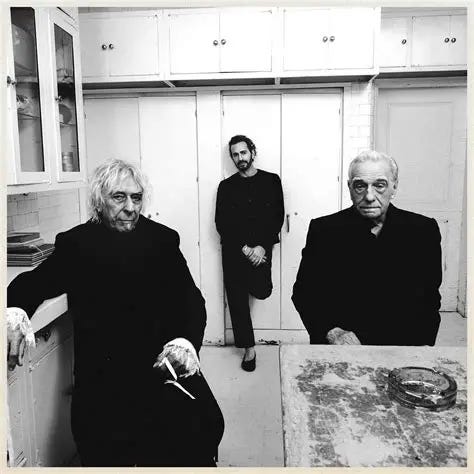
There is an obvious temptation to call this Charli’s rock pivot. There are guitars everywhere. They buzz, clash and distort until they sometimes feel like they are swallowing her voice whole. But calling Music, Fashion, Film a rock album feels a bit like calling Brat an album about partying: technically, sure, but you have missed almost everything interesting about it.
Charli has always been very good at hiding an existential crisis somewhere you might not immediately think to look for one. Brat buried some of her most uncomfortable thoughts beneath club production that made people want to dance. Music, Fashion, Film does something very similar, only now the synths have been traded for blown-out amps, clashing noise and walls of distortion.
That change in sound is important, not because Charli XCX has suddenly decided she wants to be a rock star. If anything, I think the guitars on Music, Fashion, Film are doing much the same job that the relentless club production did on Brat. They give her somewhere to hide.
For all the conversation around Charli as the ultimate party girl, there has always been something deeply existential lurking underneath her music, which is something I have always admired and appreciated about her. I actually think that was one of the downsides of Brat becoming such a colossal era. At times, it felt like the virality swallowed some of what made the album so interesting in the first place. Millions of people knew the Apple dance, but there was far less conversation about the deeply uncomfortable song hiding behind it.
Even at her most hedonistic, Charli is often thinking about who she is, how other people see her and whether the version of herself she projects bears any resemblance to the person underneath it. Music, Fashion, Film takes all of those questions and makes them pretty hard to ignore.
The album opens with its first single, Rock Music, a song that sounds like someone has taken the machinery of Brat and repeatedly driven a guitar through it. Her voice glitches and stutters against buzzing distortion as she sings about jumping from the stage and hoping someone catches her — although, crucially, if they don’t, that’s apparently fine too. Amen to that.
There is something I really love about that sentiment coming from Charli specifically. She is an artist who has always seemed to live and breathe whatever she is making at that exact moment, and Rock Music feels almost like a refusal to let the success of Brat become a creative cage. If you don’t like this era, the last one is still there. She isn’t going to spend the rest of her career attempting to recreate the exact conditions that made the world pay more attention.
It feels like a fairly perfect way to begin an album arriving in the shadow of one of the biggest cultural moments of the past decade. There was probably a version of Charli’s career where the obvious thing to do after Brat was attempt to recreate it. Instead, she has jumped.
Whether everyone follows her feels almost beside the point. But of course, jumping away from one version of yourself still leaves the slightly terrifying question of who you are supposed to be next.
SS26 and Card Declined offer one possible solution: apparently, you can go shopping. A girl after my own heart.
The two songs are very funny, but there is something much bleaker underneath them. On SS26, Charli plays with the absurdity of cultivating a bad-girl image while the actual world is falling apart around you. It is all very much Kim Kardashian sobbing into the sea over a lost diamond earring while Kourtney reminds her that there are, in fact, people dying. Charli is evidently aware of the ridiculousness of being deeply invested in your own aesthetic, reputation and what you are wearing when faced with the sheer scale of everything else going on. She also isn't going to pretend she exists above it.
That gets even more ridiculous on Card Declined, where identity becomes something you can apparently pick up alongside a designer handbag. Charli sings about shopping for “a personality / a whole backstory”, before the song eventually melts into what sounds remarkably like a sincere little love song to the bag she wants to buy. Frankly, I have felt less for actual people.
I love that neither song arrives at the obvious conclusion that caring about clothes and expensive things makes you shallow. That would be far too easy, and also slightly hypocritical from an album literally called Music, Fashion, Film. Instead, Charli seems much more interested in why we need these things in the first place. If you don’t entirely know who you are, there is something incredibly seductive about the idea that you might be able to construct a version of yourself that makes more sense.
It is a feeling I imagine a lot of us know to some extent. Buy the right clothes. Carry the right bag. Listen to the right music. Curate enough of the exterior and maybe eventually the person underneath will fall into place. I certainly cannot pretend I have never bought something because it felt like it belonged to the person I wanted to be, rather than necessarily the person I already was. Most of us are now engaged in some level of personal branding whether we consciously think about it that way or not. We choose what to post, what to wear, which parts of our personalities are worth making visible and, increasingly, what we buy becomes shorthand for the kind of person we want other people to believe we are.
Charli just happens to be doing it while millions of people are watching.
Which makes the question running underneath Music, Fashion, Film even harder to escape: if identity is something we can construct, curate and sell, how much of anyone do we ever actually get to know?
Magic Metal Montana and Persona approach that question from two completely opposite sides. One is about a relationship where very little needs to be said to feel completely understood. The other is about someone who seemingly never stops talking while in the same breath revealing absolutely nothing at all.
The former is a love song of sorts to Charli’s longtime collaborator A. G. Cook, and honestly, I find it quite beautiful. I feel the recording and production process must have been so special for both of them. “We don’t talk / we make music, we talk that way” is such a simple way of describing a relationship built around a shared language that perhaps nobody else fully understands. After spending so much of the album questioning how identity is constructed and performed, here is someone who seemingly doesn’t require the performance at all.
There is also something particularly lovely about hearing Charli articulate that through the very thing they have spent years making together. A. G. Cook has been instrumental in creating so many of the different versions of Charli we have encountered as listeners, yet Magic Metal Montana suggests that their relationship exists somewhere beyond all of them. He knows the person making the music because, in many ways, making the music is how they know each other.
It is one of my favourite odes to another person on the album, and there is something particularly special about Charli choosing to give A. G. his flowers in the language they have always shared. For a relationship built through making music together, I’m not sure there could be a more fitting way to cement what he means to her than putting it into the music itself.
Persona, meanwhile, explores a much messier kind of intimacy. It would be easy to read it as a simple callout track, with Charli taking aim at someone whose larger-than-life persona seems designed to stop anyone from getting too close. But Charli understands the trap all too well.
“We’re both under the influence of life imitating art, and we both know it”
It’s an admission of mutual guilt. When your entire world is built on aesthetics and narrative, even your closest friendships can turn into a stage play where both people are acting out the roles they think they’re supposed to have. There is a sense of two people who can see straight through one another precisely because they recognise the performance in themselves.
Perhaps that is why Persona works so well alongside Magic Metal Montana. One relationship has found its own language, allowing two people to understand each other without needing to explain themselves. The other is overflowing with words and declarations of intimacy, yet both people remain hidden behind versions of themselves that the other can see straight through.
And I suppose there is a significant difference between being seen by someone who knows you and simply being watched.
That distinction sits right at the centre of Camera, a song I have been obsessed with since I first heard a tiny snippet before its release. It is preoccupied with what happens when being looked at becomes an unavoidable part of your existence. For Charli, there is now an entire industry dedicated to capturing, interpreting and redistributing versions of her. People are truly obsessed with her, as they should be, but it must also be exhausting when every photo, outfit and life choice becomes evidence in somebody’s latest attempt to work out who you really are.
I don’t know what I’m having for dinner, let alone who I am. Who’s to say that isn’t sometimes the same for a pop star? For all the mythology we build around famous people, they are ultimately just people making art and attempting to exist alongside it. Yet we expect them to have a completely coherent sense of self at all times, ready for us to analyse from whichever fragments happen to make it into public view.
There is something quite violent about that level of perception. Not necessarily because every version of you that exists in the public consciousness is wrong, but because none of them can ever be complete. People see fragments and inevitably fill in the gaps themselves. Eventually, you are left existing alongside thousands of slightly different versions of yourself, most of which you had absolutely no involvement in creating.
I think that is what makes the album’s obsession with persona so interesting in the first place. We tend to talk about celebrity image as though it is entirely constructed by the celebrity, but at a certain level of fame, you lose control of the construction altogether. Brat is perhaps the perfect example. Charli created an album and an aesthetic, then watched as the entire world decided what being “brat” meant. At some point, the image stopped exclusively belonging to her.
Which I think makes 2007 feel really poignant. Before Charli XCX became someone whose image could be endlessly captured and interpreted, she was just a teenager in her bedroom deciding for herself what she wanted that image to be.
Placing those two versions of Charli beside one another is painfully nostalgic. In 2007, the internet offered her the possibility of creating herself and sending that creation directly into the world. There were no millions of people already waiting to tell her what it meant or compare it to the version of Charli they had already decided they preferred. She could decide who she wanted to be and, perhaps more importantly, change her mind.
I think that freedom to change your mind becomes increasingly precious the more visible you are. Most of us get to quietly outgrow old versions of ourselves without anyone particularly caring. You wake up one day and realise you don't really like the things you used to, or maybe the life you once imagined for yourself doesn't fit anymore. You change, because of course you do. Charli has spent almost two decades leaving those old versions of herself behind in public, except hers remain preserved forever and readily available for someone to demand she returns to them.
Now, she has more control, influence and cultural power than the teenager in that bedroom could possibly have imagined, while arguably having far less freedom to simply exist without being interpreted. The same internet that once gave her the tools to create herself now gives millions of other people the tools to create their own version of her.
She once created an image and pushed it out into the world. Now the world creates versions of Charli XCX and sends them back to her. But beneath every version of Charli XCX that exists in somebody else’s head, there is still a person who has to live with herself.
I’m Afraid is, for me, one of the most affecting moments on the entire album. It unravels into something that increasingly sounds like the mental breakdown it is describing.
The chorus is relentless. Charli ricochets between being a wife and still feeling like a kid, being loved and being terrified of losing it, before repeatedly demanding that someone simply take the ring away. There is barely enough room for one thought to land before another comes crashing into it. Musically, it feels like being trapped inside the kind of spiral where your brain presents every possible reason your life is about to fall apart at once and refuses to let you properly examine any of them.
I think there is something particularly raw about hearing this from someone who has seemingly just reached a place of enormous personal and professional happiness. We are sold marriage as this huge moment of arrival, as though you put the ring on and suddenly become a fully formed adult who has everything figured out. Unfortunately, brains do not work like that. Being loved and being happy doesn’t erase every version of yourself that came before. Sometimes finally having something you desperately want just gives you something new to be terrified of losing.
There is section within this song that I haven’t been able to stop thinking about:
All this pain makes me believe
I’m a better artist now
An excuse I tell myself
To act selfishly
I have always been a bit too emotionally invested in the people making the music I love, so the tortured artist thing has never felt particularly romantic to me. If a song can make me feel devastated just listening to it, my brain immediately goes to what it must have been like to actually live through the thing that made someone write it. I get to resonate with the finished product from the safety of my headphones. They had to be there.
Which is why this lyric has really stuck with me. Charli knows that some of her pain has produced incredible work and seems to be questioning what knowing that does to a person. There must be something incredibly complicated about looking back at an awful period of your life and knowing that, artistically, you got something valuable from it. Does that make it easier to find purpose in suffering that probably shouldn’t need one? Does it make it easier to forgive yourself for how you behaved while you were in it?
And then she puts that exact thought into a song, because of course she does. She says she needs to get it out so her “insides don’t turn black”, and I’m Afraid is apparently where it ended up. The whole thing feels strangely circular: pain becomes art, Charli questions what it means that her pain becomes art, and that question becomes art too.
Perhaps there isn’t much more to do with certain feelings than find somewhere to put them.
After all of that, Yeah feels almost like a release valve, although calling it that perhaps undersells just how good it sounds. There are barely any lyrics to hold onto because they don’t really need to. The production says almost everything Charli isn’t saying.
I have seen people interpret the song as Charli contextualising the idea of becoming a “yes man”, whether to the public, the music industry or simply the momentum of success itself. I actually don’t think that clashes with how I hear it at all. If anything, it makes the whole thing feel even sadder. The repeated “I don’t wanna” gradually gives way to “now I wanna feel it”, but it never really sounds like a triumphant change of heart. It sounds more like somebody slowly being worn down until resistance and acceptance become impossible to tell apart. After enough people tell you what should excite you, what should matter and what success is supposed to look like, perhaps eventually you start believing them too.
Or perhaps I’m massively overthinking a song that repeatedly says “yeah”. Entirely possible. Either way, the production absolutely rips.
That lightness carries straight into Wink Wink, where Charli seems to be having a lovely time messing with anyone who has spent the album trying to work her out. So, naturally, me. It very much feels like Charli turning around and winking back at us from behind the lens. “I’m not a bad girl anymore, I promise,” she insists. Wink wink. Make of that what you will.
The version of Charli that exists in the public consciousness has become so established that she can now play with it however she likes. She can tell us something that might be completely sincere and immediately make us question whether we should believe her. Just when you think you have successfully located the real person underneath everything, Wink Wink reminds you that Charli knows exactly what game is being played and is more than capable of playing along.
And honestly, why are we all so bothered about reaching some definitive conclusion on who she is anyway? There is so much discussion around whether an artist is authentic, whether their persona is real and what every tiny decision supposedly reveals about the person underneath it. But how do we even measure authenticity? I’m increasingly convinced it is just another construct we have collectively decided means something, usually deployed when an artist behaves in a way that matches whatever version of them we already had in our heads.
Maybe we could also just accept that human beings are complicated and enjoy the art they choose to give us. Revolutionary, I know. That doesn’t mean the person behind the work is irrelevant, or that there isn’t value in looking at what an artist might be trying to say. I have quite literally spent this entire article doing exactly that. But there is a difference between engaging with what somebody chooses to put into their work and treating those pieces like an investigation into who they really are.
Perhaps authenticity isn’t about locating some pure, completely unfiltered version of a person underneath everything else anyway. Maybe every version is real in the moment they choose to inhabit it. Wink Wink doesn’t seem particularly interested in helping us decide, and by this point, neither am I.
It feels like one last moment of tongue-in-cheek control over the way Charli is perceived, just before No One Lasts Forever takes that control away entirely.
Finally, we end on No One Lasts Forever, which is a completely normal and reasonable way to end an album if your intention is to send me into an existential crisis. I am a girl with a crippling phobia of death and whatever may or may not come after it, so let me tell you, this was some serious exposure therapy. Thank you, Charli.
After an entire album spent worrying about identity and perception, Charli seems to find an unexpected amount of freedom in the fact that none of it is permanent. Everyone knows her name now and everyone has an opinion on who she is. Even her own sense of self can swing between crushing insecurity and feeling like the best person in the room. None of it gets to be permanent, though. And even with my aforementioned phobia screaming at me as I type this, it is simply true: we all die anyway.
The song features legendary filmmaker David Cronenberg, the director behind films including The Fly and Crash, who arrives towards the end of the track to take that already uncomfortable thought to its absolute existential conclusion.
His contribution seriously floored me. Cronenberg talks about the idea of artists achieving immortality through their work before pointing out the rather obvious flaw: they aren’t actually around to experience any of it. Art can survive for thousands of years, but that means very little to the dead person who made it. “Oblivion is freedom” is a pretty brutal statement to drop into the final minutes of a pop album, but within Music, Fashion, Film, it also feels strangely freeing.
This whole album has been concerned with what it means to be seen and interpreted, yet Cronenberg essentially removes the artist from the equation altogether. People might spend forever discussing what Charli meant, deciding who she was or arguing over which version of her was the most authentic. Eventually, none of that belongs to her anymore. There is perhaps some freedom in knowing you don’t have to control the story forever.
And then, because apparently that wasn’t enough for me to contend with, his voice repeats the same line twenty-seven times:
“They are dead, they are gone, no one lasts forever.”
My immediate interpretation was the 27 Club. I will fully admit that I haven’t yet read or watched enough from Charli about this album to know whether that was actually the intention, but if it was, it is an incredibly cool and deeply sad detail. The 27 Club is perhaps one of the most extreme examples of what happens when an artist is no longer able to have any say in their own legacy. Complicated people become frozen at one age, their lives and deaths turned into mythology while the work they left behind continues without them.
Even if the repetition has absolutely nothing to do with that and I have simply gone too far down the rabbit hole, hearing Cronenberg say it twenty-seven times is haunting regardless. By the time his voice cuts off mid-sentence, the point has been drilled into you so relentlessly that it almost stops sounding like language.
No one lasts forever.
I genuinely don’t know what else to say other than: wow. Music, Fashion, Film is phenomenal. I knew I was going to love this album, but I don’t think I expected to be this completely floored by it. The writing, the production, the visuals, the wider ideas running through it — Charli has created something that I already think stands amongst the very best work of her career.
And I think what excites me most is how much more there clearly is to find in it. These are my thoughts after barely having enough time to properly live with the thing, and I already feel like I could come back in six months and write an entirely different article. There are songs I know will reveal themselves differently, ideas I will inevitably change my mind about and probably another seventeen connections I will make at deeply inconvenient times of the night.
Music, Fashion, Film is strange, funny, uncomfortable, ridiculously well produced and far more emotionally exposed than its wall of guitars initially lets on. It is Charli XCX making exactly the art she wants to make at the absolute height of her powers.
What the hell, Charli.
So much for getting a rock album…
Thank you for this masterful writing!! You made it so clear about the philosophical implications behind her lyricism. Your commentary felt so mature and logical, it was nothing like pitchfork. I appreciate it